
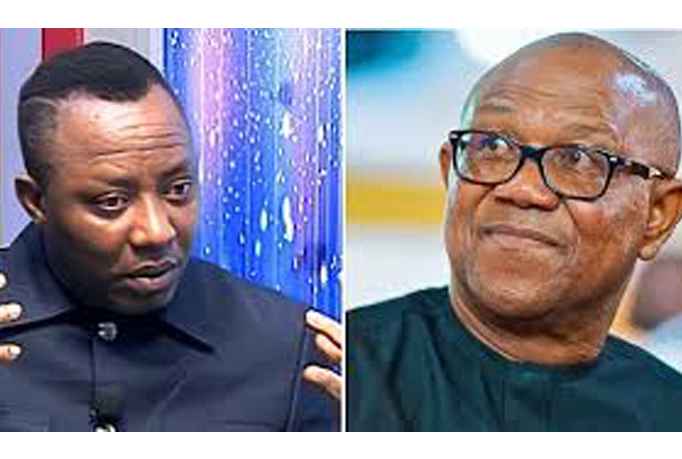
As Nigeria gradually inches toward the 2027 general elections, political tensions are already simmering—not just among candidates, but among their supporters. Recent exchanges between loyalists of Peter Obi and Omoyele Sowore have highlighted deep ideological divides within Nigeria’s opposition space, raising concerns about unity ahead of a crucial electoral cycle.
Rising Political Friction
The rivalry
between the two camps did not emerge overnight. Both Obi and Sowore were
presidential candidates in previous elections and have continued to position
themselves as alternatives to Nigeria’s dominant political establishment.
However, their approaches to opposition politics differ sharply.
Sowore has
repeatedly questioned Obi’s credibility as a genuine opposition figure, arguing
that the former Anambra governor lacks the radical stance required to challenge
entrenched political structures. These remarks have not gone unanswered.
Members of Obi’s “Obidient” movement have pushed back strongly, insisting that
Obi remains one of the most influential voices in Nigerian politics today.
Social Media as a Battleground
Much of the
clash has played out online, where supporters from both sides frequently engage
in heated debates. Platforms like X (formerly Twitter), Facebook, and online
forums have become arenas for political argument, often escalating into
personal attacks and misinformation.
In some
instances, the rhetoric has gone beyond policy disagreements. A previous verbal
exchange between Obi and Sowore themselves—marked by accusations and
counter-accusations—further energized their supporters and deepened divisions.
Ideological Divide
At the
heart of the conflict lies a fundamental difference in political philosophy:
Obi’s camp
emphasizes reform, economic prudence, and working within existing democratic
frameworks. His supporters often highlight his broad appeal, especially among
young voters seeking change through institutional means.
Sowore’s
base, on the other hand, leans toward activism and systemic overhaul,
advocating for more confrontational strategies against corruption and
governance failures.
These
contrasting visions have made collaboration difficult, even though both camps
claim to represent change.
Implications for 2027
The ongoing
clash raises important questions about the future of Nigeria’s opposition
politics. Analysts warn that internal divisions could weaken the ability of
opposition figures to present a united front against the ruling establishment.
Already,
discussions around the 2027 election suggest intense competition, coalition
talks, and shifting alliances. Without cooperation, the fragmentation among
opposition supporters may ultimately benefit incumbents.
Calls for Restraint
Amid the
tensions, some public figures have urged political supporters to engage
peacefully and respect differing opinions. The emphasis has been on maintaining
democratic values and avoiding the escalation of political disagreements into
hostility.
Conclusion
The clash
between supporters of Peter Obi and Omoyele Sowore reflects broader challenges
within Nigeria’s political landscape—where shared goals of reform are often
undermined by competing strategies and personalities. As 2027 approaches, the
ability (or inability) of these factions to find common ground could play a
decisive role in shaping the country’s political future.




0 Comments